Robot Fleet Management for Efficient Robotics Operations
Introduction
Robot fleet management helps teams control many robots from one place. It makes robot work easier to watch and manage. It can also help teams find problems faster.
Many warehouses and factories now use large robot fleets. These robots may move goods, carry items, or inspect areas. Each robot needs the right tasks, updates, and support.
A fleet system gives teams better control over this work. It can show robot status, location, battery level, and tasks. This helps teams keep daily work running with fewer delays.
What Is Robot Fleet Management?
Robot fleet management is a system for managing many robots. It helps teams track and control robots from one place. The system can also help assign tasks to each robot.
A fleet may contain tens or hundreds of robots. Checking every robot by hand can take too much time. A management system gives teams one clear view of fleet activity.
For example, a warehouse may use robots to move boxes. The system can send tasks to free robots. It can also show which robots need charging or help.
Why Is Robot Fleet Management Important?
Robot fleets can become hard to manage as they grow. More robots mean more tasks, status checks, and system updates. Fleet management helps teams handle this work in a simple way.
The system gives teams useful information about robot activity. Teams can see if robots are working, waiting, charging, or facing errors. This makes it easier to respond when something goes wrong.
For example, one robot may stop during a busy shift. The system can show its status to the team. A worker can then check the robot before it causes a long delay.
How Does Robot Fleet Management Work?
A fleet management system connects robots with a central control system. Robots send data about their work, location, battery, and health. The system then shows this data to the team.
Teams can use this information to assign new tasks. The system can also help manage charging and robot movement. Some systems can support automatic task planning and scheduling.
Imagine a warehouse with many delivery robots. One robot finishes its task near the charging area. The system can send it to charge before giving it another job.
Key Features of Robot Fleet Management
Modern fleet systems offer many useful features for robot teams. These features help teams watch robots and manage daily work. They also give teams better control over large fleets.
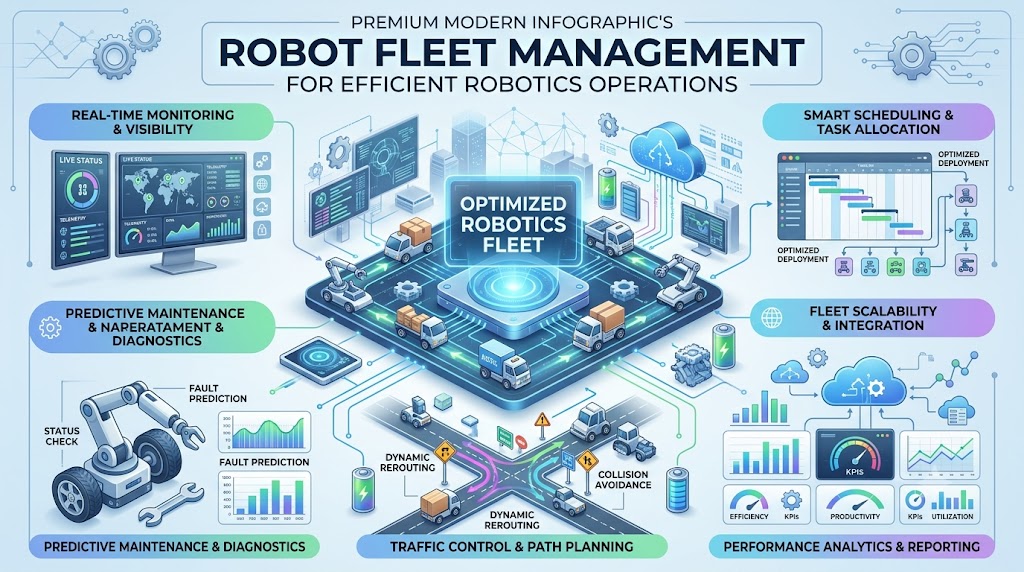
Common features include live robot status and task control. Many systems also support battery tracking, alerts, maps, and fleet reports. Some systems can manage software updates and robot settings.
A warehouse team can use these features during each shift. Workers can check robot status from one screen. They can also find robots that need charging, repair, or human support.
Robot Task Assignment
Task assignment tells robots what work they need to do. A fleet system can send tasks based on robot status and location. This helps teams use available robots more effectively.
The system may check which robot is free before sending a task. It can also consider battery levels and current work. This reduces the chance of sending the wrong robot.
For example, a robot with low battery may not receive a long task. Another nearby robot with a full battery can take the job. This simple choice can keep work moving.
Robot Health Monitoring
Robot health monitoring helps teams check robot condition. It can track battery levels, errors, temperature, and other useful data. This helps teams spot issues before they become serious.
Regular monitoring can also reduce unexpected downtime. Teams can find robots that show warning signs early. They can then inspect or service those robots.
For example, a robot may show repeated battery warnings. The team can check its battery before failure happens. This can help prevent work delays during busy hours.
Battery and Charging Management
Battery management is important for mobile robot fleets. Robots need enough power to complete their tasks safely. A fleet system can help teams track battery levels.
The system can show which robots need charging. It may also help plan charging based on current work. This helps avoid having too many robots waiting at charging stations.
For example, five robots may need power during a busy shift. The system can manage charging needs based on task demand. This helps keep enough robots ready for work.
Robot Fleet Safety
Safety is an important part of robot fleet management. Robots may share spaces with workers, machines, and other robots. Good fleet control can help reduce unsafe movement.
Fleet systems can use maps and robot data to manage movement. They can help robots follow planned paths and avoid some conflicts. Teams should still follow proper safety rules and checks.
For example, two robots may need to enter the same area. The system can help control their movement. This can reduce unnecessary stops and traffic problems.
Benefits of Robot Fleet Management
Robot fleet management can make large robot operations easier. It gives teams one place to monitor and manage robots. This can save time during daily work.
It can also improve fleet visibility and task control. Teams can find problems faster and make better use of available robots. Better monitoring may also help reduce avoidable downtime.
For example, a team can quickly find an idle robot. They can check its status and assign a new task. This helps the fleet stay active during busy periods.
Challenges of Managing Robot Fleets
Managing a robot fleet can still bring several challenges. Robots may use different hardware, software, and communication systems. Connecting these systems can take careful planning.
Teams also need trained workers to manage fleet tools. Network problems can affect robot communication. Software updates must also be planned to avoid unwanted service delays.
For example, a fleet may contain robots from different vendors. Each robot may use different control methods. A suitable fleet platform can help bring these systems together.
Robot Fleet Management in Warehouses
Warehouses are one common use for robot fleet management. Robots can move goods, carry boxes, and support picking work. Fleet systems help teams manage these robots during busy shifts.
The system can track robot locations and assigned tasks. It can also help manage battery levels and robot traffic. This gives warehouse teams better visibility.
For example, a warehouse may have robots moving items between shelves. The fleet system can assign jobs based on robot location. This can help reduce unnecessary travel and waiting time.
Robot Fleet Management in Factories
Factories can use fleet systems for many robot tasks. Robots may move parts, deliver materials, or inspect work areas. Fleet management helps teams control these tasks.
Factory teams can watch robot status from a central system. They can also track errors and task progress. This can make robot operations easier to manage.
For example, robots may carry parts between two production areas. The system can assign tasks as parts are needed. This helps support a steady flow of materials.
How to Choose a Robot Fleet Management System
Teams should first understand their robot fleet needs. They should check the number of robots and the tasks they perform. They should also review their current software and network setup.
A useful system should be easy for workers to understand. It should provide clear robot data and useful alerts. It should also support future fleet growth when possible.
For example, a company may start with ten robots. It may later add fifty more robots. The chosen system should support this growth without creating extra work.
Future of Robot Fleet Management
Robot fleets will likely become larger and more connected. More businesses may use robots for transport, inspection, and other tasks. This will increase the need for simple fleet control.
Future systems may use more automation and smart planning. They may help robots choose tasks and routes with less human input. Better data tools may also help teams plan maintenance.
For example, a fleet system could detect a repeated robot problem. It could alert the team before the problem causes downtime. This can make robot operations more proactive.
FAQs
What is robot fleet management?
Robot fleet management is a system for managing many robots. It helps teams track, control, and monitor robots from one place.
Why do businesses use robot fleet management?
Businesses use it to manage robot tasks and monitor fleet activity. It can also help teams find errors and reduce delays.
Where is robot fleet management used?
It is used in warehouses, factories, hospitals, farms, and other robot-based environments. The exact use depends on the type of robots.
Can fleet management track robot batteries?
Yes. Many fleet systems can track battery levels and charging status. This helps teams plan robot use and charging needs.
Can one system manage different robots?
Some fleet systems can manage different robot types. Support depends on the platform, robot hardware, and software standards.
Does fleet management reduce downtime?
It can help reduce avoidable downtime. Teams can spot errors and maintenance needs sooner.
Is robot fleet management useful for small fleets?
Yes. Small fleets can also benefit from central monitoring. It can make fleet growth easier to manage later.
Can fleet management assign robot tasks?
Yes. Many systems can assign tasks based on robot status, location, and availability.
Is robot fleet management fully automatic?
Not always. Some tasks can run automatically, but teams may still need to make decisions and handle exceptions.
What should teams check before choosing a system?
Teams should check robot support, ease of use, task control, monitoring, alerts, security, and future growth needs.
Conclusion
Robot fleet management helps teams control many robots from one place. It provides useful data about tasks, battery levels, health, and robot status. This makes large robot operations easier to manage.
The right system can also help teams save time and reduce delays. It can support warehouses, factories, and other robot-based operations. Good planning is still needed for safe and reliable use.
As robot fleets grow, fleet management will become more important. Teams need clear tools that make robot work simple to monitor. A strong fleet system can help businesses manage this growth with confidence.