The Patient’s Guide to Kidney Stone Care: Symptoms, Causes, and Modern Treatments
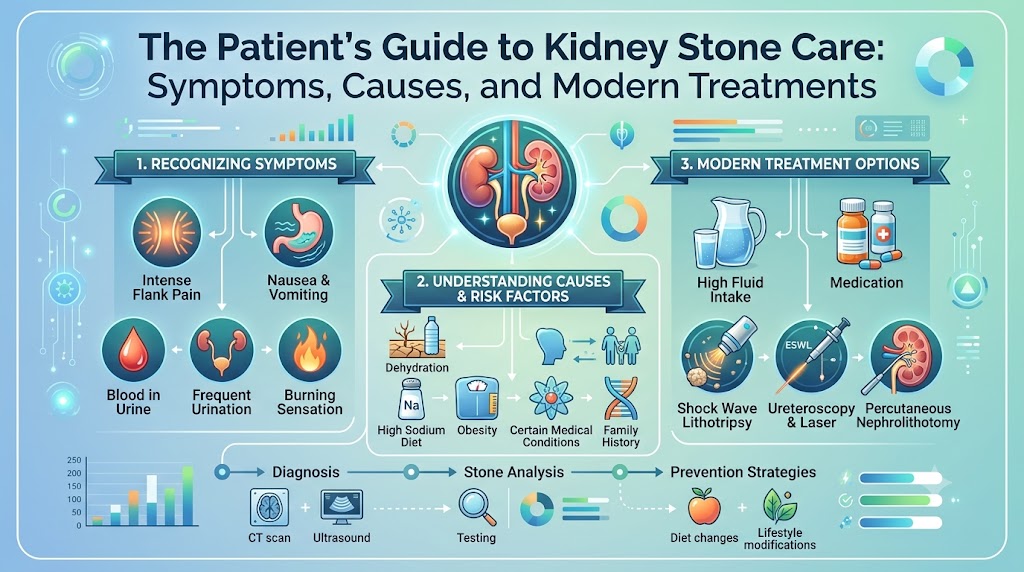
A kidney stone can turn an ordinary day into a very uncomfortable experience. The pain may appear suddenly, but deciding what to do next does not always mean rushing into a procedure.Kidney Stone Treatment usually follows a step-by-step process. Doctors first understand the stone, assess whether it is creating a risk, and then choose an appropriate way to manage it.
Step 1: Find Out What Is Happening
The first goal is to understand the stone rather than treat it blindly.
A doctor may ask about pain, urinary symptoms, previous stones, medications, and other health conditions. Depending on the situation, urine tests, blood tests, ultrasound, or CT imaging may be recommended.
These evaluations can help identify the stone's size and position and whether it is interfering with normal urine flow.
Step 2: Decide Whether Immediate Treatment Is Needed
Not every kidney stone requires immediate removal.
If a small stone is causing manageable symptoms and there are no serious complications, a doctor may recommend watching its progress. Follow-up can help determine whether the stone is moving or has passed.
Treatment becomes more important when the stone causes persistent pain, urinary obstruction, repeated problems, or other complications.
Step 3: Match the Treatment to the Stone
Different situations call for different solutions.
Small stones: Some may pass naturally with medical guidance and appropriate symptom management.
Stones that are difficult to pass: A urologist may consider medicines or a procedure to help remove or break the stone.
Larger or complicated stones: Procedures such as ureteroscopy, shock wave lithotripsy, or other stone-removal techniques may be considered depending on the circumstances.
The objective is not simply to remove a stone but to restore comfortable and safe urinary function.
Step 4: Pay Attention to Warning Signs
Some symptoms should not be treated as ordinary kidney-stone discomfort.
Get prompt medical attention if you develop:
- Fever or chills
- Severe or increasing pain
- Persistent vomiting
- Difficulty urinating
- Blood in the urine with concerning symptoms
- Feeling unusually weak or seriously unwell
A urinary infection occurring alongside an obstruction can require urgent treatment.
Step 5: Think Beyond Stone Removal
Finishing treatment does not necessarily mean the problem is finished.
People who have had kidney stones may be at risk of developing them again. Depending on the individual case, a doctor may recommend reviewing fluid intake, eating habits, medications, or the stone's composition.
For recurrent stones, additional evaluation may help identify factors contributing to their formation.
Treatment at a Glance
Patient situation
What may happen
Small, uncomplicated stone
Observation and medical management
Ongoing discomfort
Further assessment and possible treatment
Stone not passing
Procedure may be considered
Significant obstruction
Prompt urological evaluation
Infection with obstruction
Urgent medical care
How Patients Can Prepare for a Urology Visit
A little preparation can make the consultation easier. Take information about previous kidney stones, current medicines, recent test reports, and the timing of your symptoms.
You can also ask:
- How serious is my stone?
- Is it likely to pass on its own?
- How long should I wait before considering treatment?
- What procedure would be appropriate if it does not pass?
- What can I do to lower my future risk?
Clear communication helps patients understand why a particular treatment is being recommended.
FAQs
Does having a kidney stone always mean surgery?
No. Some stones can pass naturally and may only require monitoring and medical management.
How long can a stone take to pass?
The time varies depending on factors such as stone size and location. Your doctor can provide more appropriate guidance based on your imaging.
Can kidney stones be prevented?
The risk of future stones may sometimes be reduced through appropriate hydration, dietary changes, and treatment of underlying causes.
When should I see a urologist?
Persistent pain, recurring stones, urinary problems, suspected obstruction, or concerning symptoms should be evaluated by a healthcare professional.
Conclusion
Good Kidney Stone Treatment is not simply about removing a stone as quickly as possible. It involves understanding the patient's condition, deciding when intervention is necessary, selecting a suitable treatment, and reducing the chances of future problems.With proper evaluation and guidance from Urology Specialists, patients can better understand their options and take the next step with confidence.