Every Drop Counts: Water-Saving Irrigation, Farming Information in Hindi, and Scheme Support for Small Farms
 Introduction
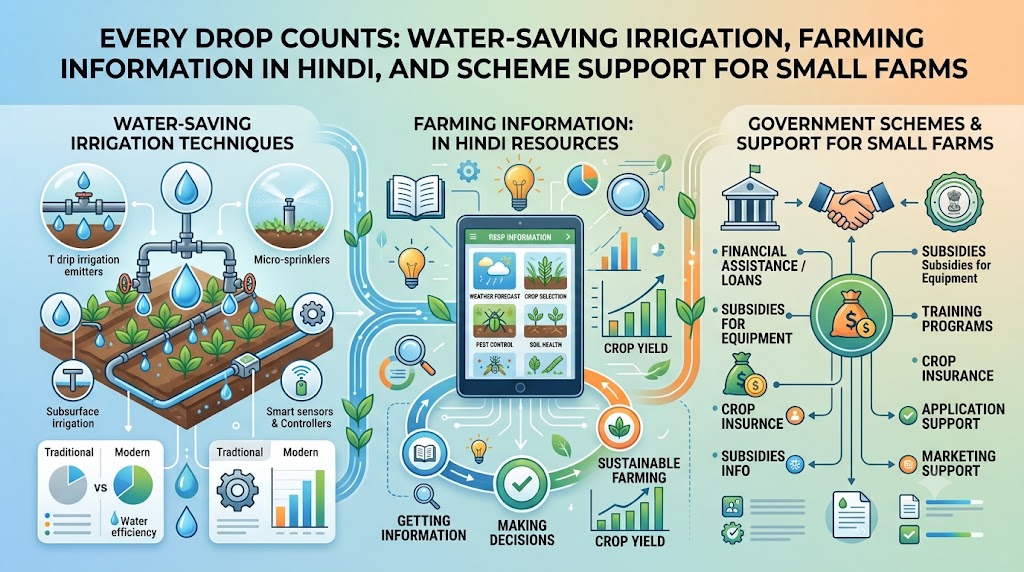
Water is the quiet worry behind every crop. Wells run low in summer. Canal turns come late. Pumps eat diesel or power. Many families spend more on watering than they realise. Clear farming information in Hindi can help them water smarter, not harder. MAHTO is a Hindi-first rural knowledge platform. It explains agriculture, government schemes, livestock, mandi prices, and village business in plain words. It is not a government website. This blog looks at simple ways to save water on a small farm. It also covers support papers, credit, crops, animals, and side income. Read it with your family, and pick one change to try.
What Does Water-Saving Irrigation Mean?
Water-saving irrigation means giving the crop enough water with less waste. It is not about giving less than the plant needs. It is about sending water where roots can use it. Flooding a field often wastes a lot through run-off and deep seepage. Better methods place water near the plant or time it with growth stages. Some use pipes, some use small channels, and some simply use mulch. The right method depends on soil, crop, and money. Start with the cheapest fix, then upgrade slowly.
Why This Matters for Farmers and Villages
Water costs money and effort. Pumps need fuel or power, and wells can dry up. When one farmer overuses water, neighbours may go short. Saving water also saves time, since fewer hours are spent running pumps. Crops often grow more evenly when watered with care. Over time, careful use also protects the village water table. That is the hidden store under every field. Families that learn to save water face dry years with less fear. So this skill benefits the whole community.
Farming Information in Hindi: Why Simple Language Helps
Irrigation guides often use technical terms. Words like drip, emitter, and field capacity can stop a reader. Farming information in Hindi explains each in daily speech. Drip means water that falls slowly near the plant, drop by drop. Field capacity means how much water the soil can hold. With such words made clear, a farmer can judge options on his own. He can also explain a plan to family and hired workers. Clear language lowers the risk of buying the wrong equipment. Still, ask an expert before any large purchase.
Government Schemes for Farmers
Some government schemes for farmers support irrigation and water saving. States may offer help for pipes, sprinklers, drip kits, or small ponds. Others support borewell repair or community water works. Rules, crops covered, and benefits differ by state. Some require advance registration. Ask your block agriculture office what is open now. Also ask which documents you must carry. MAHTO.IN explains scheme basics, documents, and common mistakes in easy steps. Use such guides to prepare. The official office makes the final decision. Do not pay middlemen for promised approval.
PM Kisan eKYC Explained Simply
Irrigation upgrades take money, and steady support helps. If you receive PM-Kisan benefits, keep PM Kisan eKYC complete. It is an online identity check that confirms the right person receives the scheme benefit. Check your status on the official portal. Make sure your name, bank account, and mobile number match your papers. Matching land records also help for water-saving schemes, since many ask for proof of land. A common service centre can help if the online route fails. Steps may change, so follow the official portal. Never share your OTP.
Kisan Credit Card: What Farmers Should Know
A Kisan Credit Card is meant for farm needs and may be used for crop costs. Some banks may treat certain irrigation items differently. So ask your branch what the card covers. Carry ID, address proof, and land papers. Ask about interest, limits, and repayment dates. A separate farm loan may suit larger equipment better. Compare options before signing. Borrow only for what you truly need. Plan repayment after the crop sells. Rules differ by bank, so confirm current terms with staff.
How to Check Mandi Prices
Water decisions should follow market sense. Some crops need far more water than others, yet may not pay more. So learn how to check mandi prices before you choose what to grow. Use official market portals, mandi boards, and trusted traders. Compare rates over several weeks. Then think about water cost per crop. A thirsty crop may still be worth it, but only if the market supports it. Write rates in a notebook. Subtract transport costs. Then decide what fits your water supply.
How to Grow Paddy
Paddy is known as a thirsty crop, so water care matters here. If you plan how to grow paddy, ask your agriculture office about methods that use less water. Some farmers keep the field moist and allow short dry gaps instead of constant flooding. Not every soil or area suits this. So seek local guidance first. Level the land to stop pooling. Fix bund leaks quickly. Keep nursery beds well managed. Control weeds early, since they steal water. Choose a variety suited to your season. Never guess fertilizer amounts.
How to Start Organic Farming
Healthy soil holds water better. If you wonder how to start organic farming, begin with soil cover and compost. Mulch with crop waste or dry leaves to reduce evaporation. Compost acts like a sponge in the soil. Green manure crops protect bare ground from sun and heavy rain. Plant hedges or trees on field edges to slow hot winds. Start with one small plot and compare its watering needs with your normal field. Keep notes. Results take seasons. Learn label rules before selling as organic.
How to Start Goat Farming
Goats need less water than large cattle, but they still need clean water daily. Here is how to start goat farming with water in mind. Place a sturdy trough that is easy to clean. Keep it shaded so water stays cool. Raise the shed floor so wash water drains away. Collect droppings in a covered pit, and use the finished compost on a plot. Start with a few animals and a breed suited to your climate. A local veterinarian should guide vaccines and treatment. Do not treat sick animals on your own.
Livestock Farming Information
Good livestock farming information includes water planning. Dairy animals drink a lot, and milk output can drop if water is scarce. Poultry needs clean water in every season, with extra care in heat. Fish ponds depend on steady water quality and level. In every case, dirty water spreads disease. Clean troughs often. Vaccines protect against common illness, and your veterinarian sets the schedule. Balanced feed also matters. Before you add animals, check that your well, pond, or tank can support them in the driest months.
Village Business Ideas
Water needs create useful village business ideas. A family may repair pumps, pipes, and sprinklers. Another may rent small irrigation sets by the day. Some youth can learn to install simple drip lines for neighbours. A group may build and maintain small farm ponds. Others sell compost and mulch material. Test demand first, and talk to farmers about what they need. Keep home and business money separate. Count your own labour as a cost. No idea guarantees profit.
Common Mistakes Farmers Make
- Flooding fields by habit. Ask what your crop truly needs.
- Leaving pipe and bund leaks unfixed. Small leaks waste a lot over time.
- Watering at noon in hot weather. Early morning or evening works better.
- Buying equipment without advice. Ask the agriculture office first.
- Leaving PM Kisan eKYC pending. Support may pause.
- Taking a Kisan Credit Card loan for items the bank may not cover. Ask first.
- Choosing a thirsty crop without learning how to check mandi prices.
- Trusting dealer claims about government schemes for farmers. Verify at the office.
- Giving animals dirty water. Disease spreads quickly.
- Ignoring the village water table. Overuse today hurts everyone tomorrow.
A Simple Example
This is a fictional example. A farming family has a small well and two plots. Every summer, the well runs low. They read water guides on MAHTO.IN and list their problems. Then they check for leaks in their pipes and bunds and fix them. At the agriculture office, they ask which irrigation support is open. They also ask about suitable crops for dry months. Before the next season, they compare market rates for two crops. They add mulch to one plot as a trial. Each step is confirmed with a local office.
How MAHTO Can Help
MAHTO helps families plan water use with less stress. Its farming pages cover crops, irrigation, soil testing, fertilizers, pest control, and calendars, including how to grow paddy and how to start organic farming. Scheme pages explain PM-Kisan, PM Fasal Bima Yojana, Kisan Credit Card, and Soil Health Card. They share eligibility, benefits, documents, application steps, and common mistakes. Livestock pages offer livestock farming information on dairy, poultry, fish, goats, and feed. Business pages share village business ideas for many budgets. The goal is farming information in Hindi that is clear and useful. MAHTO.IN is not an official portal. It cannot promise income, subsidy, or loan approval.
Frequently Asked Questions About Saving Water on the Farm
- How does farming information in Hindi help me choose an irrigation method?
It explains terms like drip and field capacity in daily words. You can compare options without fear. Family members can join the talk. Still, ask your agriculture office before buying equipment, since soil and crops differ from place to place. - Which government schemes for farmers support water saving?
Some states help with drip kits, sprinklers, pipes, or small ponds. Others support borewell repair or community works. Ask your block agriculture office what is open now. Carry land papers, ID, and bank details. Do not pay anyone for promised approval. - Why does PM Kisan eKYC matter when I plan irrigation upgrades?
Steady scheme support can help you save for equipment. If you receive PM-Kisan, complete eKYC on the official portal. Match your name, bank account, and mobile number. Land records also help in other applications. A common service centre can assist if needed. - Can a Kisan Credit Card pay for irrigation items?
It depends on the bank and the item. Ask your branch directly. Carry ID, address proof, and land papers. Compare it with other farm loans. Know the interest and repayment dates. Approval is the bank’s decision and is never guaranteed. - How to check mandi prices when I choose a crop for a dry season?
Use official market portals, mandi boards, and trusted traders. Track rates over several weeks. Compare crops that need less water with those that need more. Subtract transport cost. Then pick a crop your water supply can support. - Can I save water when I learn how to grow paddy?
Ask your agriculture office about local methods that use less water. Level the field, fix bund leaks, and control weeds early. Some areas allow short dry gaps between watering. Not every soil suits this, so seek local advice first. - How does mulch help if I want to know how to start organic farming?
Mulch covers the soil and slows evaporation. It also cuts weeds and keeps roots cooler. Use crop waste or dry leaves. Start on one small plot and compare it with your regular field. Keep notes for several seasons. - How to start goat farming without wasting water?
Use a sturdy, shaded trough and clean it often. Raise the shed floor so wash water drains out. Start with a few animals. Meet a veterinarian before buying. Use composted droppings on a plot. Keep records of feed and water use. - Where can I get livestock farming information on water needs?
Ask your district veterinary or animal husbandry office. Farm training centres also help. Plain guides on MAHTO.IN can prepare your questions. Check that your water source lasts through the driest months. Ask a veterinarian before treating any illness. - Which village business ideas fit water-saving work?
Pump repair, pipe fitting, and equipment rental suit many villages. Some groups help neighbours set up simple drip lines. MAHTO.IN shares such village business ideas as simple guides. It is a Hindi-first learning platform, not a government site, and cannot promise income.
Final Thoughts
Saving water is a habit, not a single purchase. Start with leaks, timing, and mulch. Ask your agriculture office about support before you buy anything big. Keep PM Kisan eKYC complete, and use a Kisan Credit Card only for real needs. Learn how to check mandi prices before you choose a thirsty crop. Skills like how to grow paddy, how to start organic farming, and how to start goat farming all gain from careful water use. Use farming information in Hindi, steady livestock farming information, and practical village business ideas to plan. Confirm government schemes for farmers on official sources. MAHTO will keep sharing simple guides for rural families.