From News Alerts to Real Understanding: Building a Better Way to Follow Daily Events
Introduction
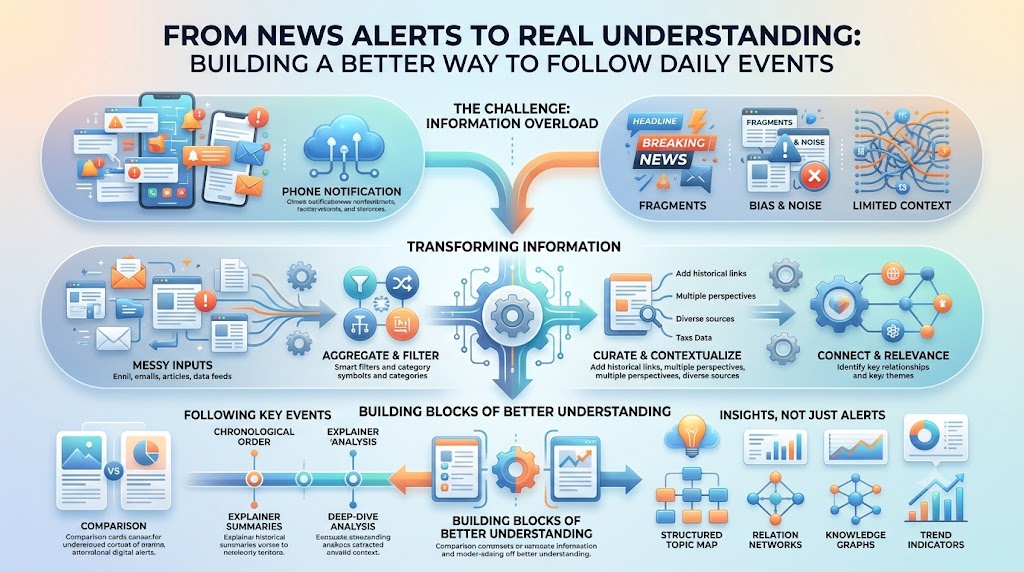
A new alert can arrive at any moment. One reports a business change. Another describes a scientific discovery. Soon, a reader has dozens of updates but little time to understand them.
Following news should not mean checking every notification. It should help people understand changes that matter to their lives, work, and communities.
An AI News Aggregator offers one way to organize this process. It gathers headlines from different publishers, making relevant reports easier to find. HeadlineSift helps readers discover developments across countries and news categories. Its collection brings together headlines from hundreds of news sources.
The real challenge is deciding what deserves attention. Readers need more than quick updates. They need context, clear explanations, and evidence they can check. Good news habits make room for all three.
Why Constant News Alerts Can Be Unhelpful
News alerts often create a feeling of urgency. Every notification seems important, even when the story can wait.
Frequent interruptions can make it harder to focus on one subject. Readers may also open several reports that repeat the same basic information. This takes time without always improving understanding.
A better approach starts with clear reading goals. Someone running a small business may need economic updates. A student may care more about education and technology. Different readers have different reasons to follow the news.
An AI News Aggregator can help bring related headlines together. Readers can review available stories at a convenient time instead of reacting to every alert.
However, convenience should not mean ignoring urgent information. Safety notices and essential local updates may need immediate attention. Readers should choose their alert settings according to their actual needs.
What Makes an AI News Aggregator Useful?
An AI News Aggregator collects headlines from multiple publishers and organizes them for easier discovery. It may group reports by subject, location, or other useful signals.
This arrangement helps readers explore connected events. A report about new workplace rules may lead to related stories about employees, companies, and economic effects.
HeadlineSift.com supports discovery across global developments and different news categories. Readers can search for subjects and find related headlines in one place.
An AI News Aggregator can also make repeated coverage easier to recognize. When several publishers report the same event, readers can look for articles that provide additional details.
Still, aggregation does not guarantee that every relevant story appears. Some sources may not be included, and available coverage can vary. Readers should search further when a subject needs deeper investigation.
How an AI News Summarizer Helps With Busy Reading
An AI News Summarizer turns a longer report into a shorter explanation. It can help readers identify the main subject before reading the complete article.
This is useful when a report includes several stages, unfamiliar terms, or background information. A short overview may help readers decide which details need closer attention.
However, shorter text can lose important meaning. A summary might omit a condition, miss a disagreement, or present an early claim as settled fact.
Readers should check important statements against the original report. This includes names, dates, figures, and explanations of cause and effect.
HeadlineSift.com helps readers discover news and review AI-generated explanations. These summaries should support the reading process, not replace original reporting.
Selecting Curated News Headlines With Care
Curated News Headlines are selected and arranged to make relevant information easier to find. Curation means organizing material according to chosen rules or signals.
A system may consider freshness, topic relevance, source information, and story significance. These signals can help readers locate reports connected to their interests.
For example, someone researching household energy costs may want reports about supply, public policy, and new technology. Curated News Headlines can help bring these subjects into view.
But selection always has limits. A popular story may receive more attention than a smaller issue with serious local effects. A new report may also lack strong supporting evidence.
Readers should look beyond the first group of results. HeadlineSift.com helps organize news discovery, but the reader must still judge the value of each report.
Following Changes With a Breaking News Aggregator
A Breaking News Aggregator helps readers discover updates about events that are still unfolding. It brings together available reports so readers can follow changes over time.
The first account of an event may be incomplete. Later reporting may add new evidence, correct an earlier statement, or explain details that were not known initially.
Readers should check when each update appeared. They should also look for corrections and distinguish confirmed facts from claims that remain uncertain.
A Breaking News Aggregator can reduce the effort needed to find developing coverage. However, it cannot make uncertain information certain simply by displaying it quickly.
HeadlineSift.com helps readers discover developing stories from publishers worldwide. Readers should open the original reports before sharing major claims or relying on early explanations.
Why a Global News Aggregator Helps Connect Events
A Global News Aggregator brings together headlines from international, national, and regional coverage. It can help readers notice connections between events in different places.
For example, a fictional shortage of a manufacturing material could affect factories in several countries. One region might report supply problems, while another discusses higher production costs.
These reports may describe different parts of the same issue. Reading them together can reveal relationships that one local report might not explain.
HeadlineSift.com helps readers discover news across countries and categories. A Global News Aggregator can support a broader view of international developments.
However, international coverage may not include every local detail. Readers should look for reporting from affected communities and check whether the sources provide evidence for their claims.
Finding Practical Updates Through a Technology News Aggregator
A Technology News Aggregator organizes reports about artificial intelligence, cybersecurity, software, gadgets, and cloud computing.
Technology news can affect everyday choices. A security warning may encourage people to review their accounts. A software update may change how a workplace completes a task.
Readers should distinguish useful technical information from promotional claims. A company may describe a product as faster or safer without showing enough evidence to support that statement.
A Technology News Aggregator can help readers find relevant reports from different publishers. HeadlineSift.com supports discovery of technology developments alongside other subjects.
Before changing a system or buying a device, readers should examine the original details. They should check compatibility, limitations, and independent evidence where available.
Reading Company Updates With a Business News Aggregator
A Business News Aggregator collects reports about companies, industries, and wider economic conditions. It helps readers follow changes that may affect their work or business interests.
Company announcements can describe new services, planned expansions, or management decisions. Industry reporting may examine competition, customer demand, and production costs.
These reports serve different purposes. An announcement explains what a company says it intends to do. Further reporting may examine the practical challenges or results.
HeadlineSift.com helps readers explore business developments alongside global and technology news. A Business News Aggregator can make related coverage easier to discover.
Readers should avoid treating future plans as completed results. They should also compare evidence before making important business decisions based on a single report.
Understanding Financial News Headlines Before Drawing Conclusions
Financial News Headlines cover market movements, economic policy, company results, and financial announcements. These reports can help readers follow changes in the economy.
However, a short headline rarely explains every factor behind a market movement. Prices may change for several reasons, and the available information may not show the full picture.
Readers should check the reporting date, supporting figures, and original source. They should distinguish confirmed results from forecasts and personal opinions.
HeadlineSift.com helps readers discover financial reporting alongside other news categories. Financial News Headlines can support general awareness, but they cannot determine what is right for every person's financial situation.
This information is not financial advice. Speak with a qualified financial professional before making personal investment, tax, or money decisions.
Using News Impact Analysis to Ask Better Questions
News Impact Analysis explores why a development matters and who may be affected. It connects reported facts with possible consequences.
Consider a fictional town planning to change its waste collection service. Residents may want to know which areas are affected, when the change begins, and whether collection schedules will differ.
An impact explanation can help readers identify the right questions. Yet possible consequences should not be confused with confirmed outcomes.
AI-generated insights can contain errors or miss local conditions. Readers should check the original reporting and supporting evidence before accepting a conclusion.
HeadlineSift.com can support news discovery through AI-assisted context and impact explanations. Useful News Impact Analysis should explain the evidence, identify uncertainty, and avoid presenting guesses as facts.
Could a Personalized News Digest Make Reading Easier?
A Personalized News Digest is a collection of stories arranged around a reader's interests. It aims to make relevant information easier to find.
A teacher might want updates about education and digital learning. A shop owner might prefer business conditions, consumer trends, and local developments.
Personalization can reduce the effort needed to find preferred subjects. However, it can also limit exposure to unfamiliar issues if readers follow only selected topics.
A Personalized News Digest is a planned future capability for HeadlineSift.com. It should not be described as a feature currently available.
Readers can still create a balanced routine by exploring different categories and comparing viewpoints. A useful reading habit includes familiar interests and important stories that may fall outside them.
A Five-Step Method for Checking Important Stories
Readers can improve their news habits without using complicated methods. The following steps offer a simple starting point.
Step 1: Identify the original source. Check who published the report and who made the claim.
Step 2: Check the date. An older article may describe a situation that has since changed.
Step 3: Read beyond the headline. Important conditions and qualifications may appear later in the report.
Step 4: Compare independent coverage. Look for additional evidence rather than several articles repeating one statement.
Step 5: Review the wording. Dramatic language can make uncertain claims sound more convincing than they are.
An AI News Aggregator can help readers locate relevant reports for these checks. An AI News Summarizer can provide an initial overview, but neither removes the need to verify important details.
Ten Habits That Can Make News Reading Less Effective
- Checking notifications constantly: Frequent interruptions make focused reading harder.
- Reading without a purpose: Unplanned browsing can consume time without answering useful questions.
- Trusting the first report: Early accounts may lack confirmation or important context.
- Ignoring source details: Readers need to know where claims originated.
- Confusing a summary with evidence: Short explanations may leave out supporting information.
- Following only familiar topics: Narrow reading can hide useful connections.
- Treating company claims as proven results: Announcements may describe plans rather than completed work.
- Overlooking local reporting: International coverage may miss effects on nearby communities.
- Sharing emotional headlines immediately: Strong reactions can spread unverified information.
- Ignoring later corrections: New evidence can change an earlier explanation.
A Fictional Example of a More Focused News Routine
Imagine a fictional community volunteer who wants to understand a proposed change to local bus services. The volunteer has limited time and needs to know which residents might be affected.
The volunteer opens HeadlineSift.com and discovers reports about transport planning, local services, and public spending. An AI News Summarizer provides an initial overview of the available stories.
Next, the volunteer opens the original reports. One explains the proposed route changes. Another discusses concerns raised by residents. The volunteer checks whether officials have approved the plan or are still collecting feedback.
This process helps separate confirmed decisions from suggestions. It also reveals which questions remain unanswered.
The volunteer saves time by organizing the search instead of opening unrelated stories. However, the final understanding comes from checking the details and comparing different reports.
This fictional example shows how news tools can support practical research without replacing careful judgment.
How HeadlineSift Helps Readers Stay Informed
HeadlineSift helps readers discover headlines from hundreds of news sources across countries and categories. Its searchable collection supports exploration of international affairs, technology, business, and financial developments.
AI-supported summaries can offer short explanations of selected reports. Curation can organize headlines using relevance, freshness, source credibility signals, and story significance. These methods can support discovery, but they cannot guarantee accuracy or complete coverage.
Readers can explore developing stories and review AI-generated context about why events matter. Source attribution and direct links to original reporting help readers examine details for themselves.
HeadlineSift aims to make news discovery more manageable without suggesting that automated tools replace original reporting. Its planned Personalized News Digest may offer another way to organize reading interests in the future.
Readers should continue checking evidence, comparing sources, and watching for corrections. A useful platform helps people find information. Responsible reading helps them understand it.
Frequently Asked Questions About Daily News Reading
1. How can an AI News Aggregator reduce time spent searching?
An AI News Aggregator brings headlines from different publishers into one searchable place. This can reduce the need to visit many websites individually. Readers can scan relevant subjects and choose which reports deserve closer attention. They should still check original articles before accepting important claims or sharing information.
2. What are the main limits of an AI News Summarizer?
An AI News Summarizer can omit qualifications, misunderstand details, or leave out background. It is useful for an initial overview, but it cannot guarantee a complete account. Readers should compare important claims with the original report, especially when the subject involves safety, public policy, or financial decisions.
3. Why should I check Curated News Headlines carefully?
Curated News Headlines can help organize stories by relevance and other selection signals. However, selection may leave out smaller issues or reports from less visible communities. Readers should look beyond the first results when necessary and consider whether the available sources provide enough evidence for a fair understanding.
4. Can a Breaking News Aggregator confirm an event immediately?
A Breaking News Aggregator can show available reports quickly, but speed does not guarantee confirmation. Early information may be incomplete or later corrected. Readers should check publication times, seek reliable confirmation, and avoid sharing uncertain claims as facts. Developing events often require patience and repeated verification.
5. What can I learn from a Global News Aggregator?
A Global News Aggregator can help readers compare coverage across countries and regions. It may reveal different effects, concerns, or responses related to one event. However, international coverage may miss local details. Readers should also seek reporting from affected communities to understand how a development influences people directly.
6. How can a Technology News Aggregator support learning?
A Technology News Aggregator helps readers discover reports about software, cybersecurity, artificial intelligence, gadgets, and cloud computing. It can introduce unfamiliar topics and reveal changes in digital tools. Readers should check original technical details and independent evidence before accepting product claims or changing their own systems.
7. Why might a Business News Aggregator be useful to a small business?
A Business News Aggregator can help owners follow industry changes, company announcements, and economic conditions. These reports may suggest questions worth investigating. However, forecasts and announcements do not guarantee future results. Owners should examine original evidence and consider their own circumstances before making important business decisions.
8. How should readers interpret Financial News Headlines?
Financial News Headlines provide information about markets, company results, and economic developments. They may not explain every cause or risk behind an event. Check the reporting date, figures, and original source. For personal financial, investment, or tax decisions, seek guidance from a qualified professional rather than relying on headlines alone.
9. What questions should News Impact Analysis answer?
News Impact Analysis should explain why a development matters, who may be affected, and what evidence supports the explanation. It should also identify uncertainty and separate possible consequences from confirmed outcomes. Readers should check the original reporting because AI-generated insights can contain mistakes or overlook important local details.
10. Is Personalized News Digest currently available through HeadlineSift.com?
Personalized News Digest is a planned future capability for HeadlineSift.com, not a feature described as currently available. The concept involves organizing news around reader interests. Readers can already build a broader routine by exploring different categories, comparing independent reports, and checking original sources for important details.
Final Thoughts
Following news well does not require reading every update. It requires choosing relevant subjects, finding useful reports, and checking important claims. An AI News Aggregator can organize headlines, while an AI News Summarizer can provide an initial explanation.
Curated News Headlines and broader coverage can make discovery easier. Still, readers should look for evidence and remain alert to missing details. Financial and developing stories deserve particular care because information can change or remain uncertain.
HeadlineSift helps readers discover news across countries and categories. Its tools can support a more focused routine, while original reporting remains essential. Read with purpose, compare sources, and allow evidence to guide your understanding.