How to Evaluate Software for Better Business Decisions
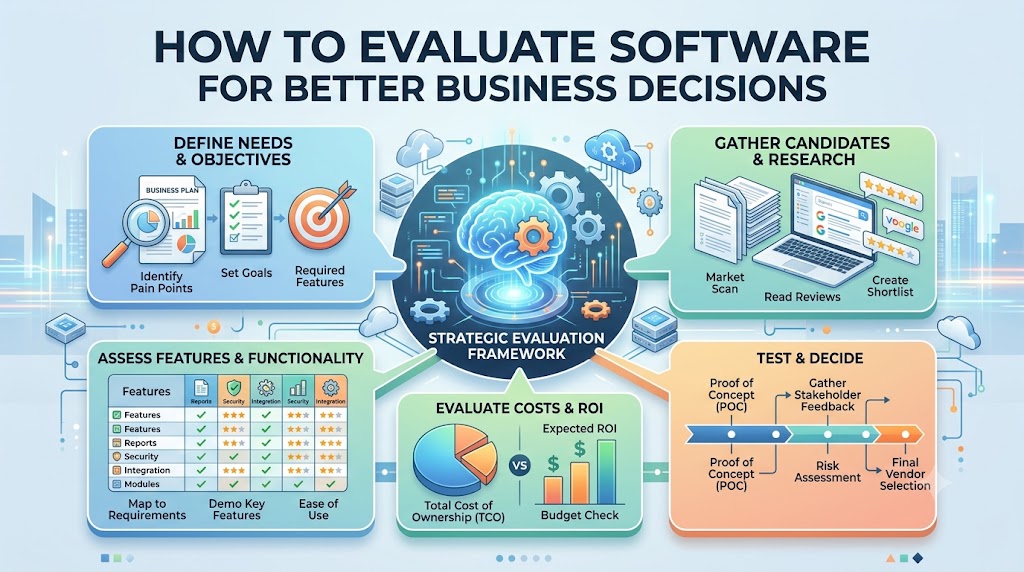
Introduction
Are you unsure which software deserves your attention? Many teams face this problem during software research. Product pages often show long feature lists. Yet, those lists may not answer your real questions. A simple software comparison can help you look closer. Software reviews can also provide useful product details. The key is to research with a clear purpose. Start by understanding your team's daily work. Then identify the tasks that need support. Look at the features that solve those tasks. Check cost, security, integrations, and support. Also think about how easily your team can use the product. BestAIToolix.com supports software discovery and research across many categories. It covers AI, cloud, DevOps, security, marketing, finance, HR, and other business areas.
What Does Software Evaluation Mean?
Software evaluation means checking whether a product fits a specific need. It involves more than reading a product description.
First, identify the task you want to improve. Then decide what the software must do.
After that, check the product against those needs. Look at features, pricing, limits, security, and support.
A software directory can help you find suitable options. It groups products by category and use.
This can make early research easier. You can create a shortlist before deeper evaluation.
The process should stay focused. Avoid checking every possible feature. Give more attention to functions that affect your daily work.
Why Does Software Evaluation Matter?
Software can shape how teams complete everyday tasks. A poor fit can create more work.
Employees may need extra steps. They may also need more training. Some tools may not work well with existing systems.
Good evaluation helps reveal these issues early. It gives teams a better view of each product.
Cost also matters. A low starting price may not show the full picture.
Some plans may have user limits. Others may charge more for certain functions.
A software buying guide can help organize these checks. It can turn a large search into smaller steps.
Define the Result You Need
Before searching, define the result you want. Keep the goal simple.
Maybe you want faster reporting. Maybe you want better customer tracking.
You may want easier project planning. You may need stronger access controls.
Write the goal in one sentence. This gives your research a clear direction.
Next, list the tasks connected to that goal. This shows which software functions matter.
This approach makes software comparison more practical. You compare products based on actual work.
It also reduces distractions. You can ignore features that do not support your main goal.
Separate Must-Have and Nice-to-Have Features
Not every feature deserves equal attention. Separate your requirements into two groups.
Must-have features should support essential tasks. Products missing these features may leave your shortlist.
Nice-to-have features can improve the experience. However, they should not control the whole decision.
Think about your team size too. Different teams can have different needs.
User roles may also matter. Some employees may need full access. Others may need limited access.
Your requirements should stay easy to understand. Simple requirements make research much faster.
Key Features to Understand
Features show what software can do. However, feature lists need careful reading.
Start with core functions. These should match the tasks you identified.
Then check usage limits. Look for limits on users, storage, or activity.
Review access controls too. Different users may need different permissions.
Next, examine integrations. Your software may need to connect with existing tools.
Check reporting functions when reports matter. Also review search and data management features.
Finally, consider setup. Some products may need training or configuration.
Always check the current plan details. Features can differ between plans.
Common Use Cases
Software supports many business activities. Sales teams may manage leads and customer records.
Marketing teams may plan campaigns and track results. Finance teams may manage invoices and financial tasks.
HR teams may manage employee records. IT teams may monitor systems and services.
Project teams may manage tasks and deadlines. Developers may use tools for coding and testing.
An AI tools directory can help users discover AI products. These tools may support writing, research, coding, design, and automation.
A general software directory can cover many other categories. It may include cloud, security, finance, HR, marketing, and operations tools.
What to Check Before Choosing Software
Start with the main business need. Make sure the product supports that need.
Then check the required features. Do not let optional features distract you.
Review pricing next. Look at the plan that matches your expected use.
Check user limits and other restrictions. These details can affect the real cost.
Security should also receive attention. Review privacy information and access controls.
Next, check integrations. Make sure the product works with key systems.
Support is another useful factor. Check documentation and available support channels.
Finally, think about usability. Your team needs to use the product regularly.
How to Compare Software Tools
A consistent process makes research easier. Use the same questions for every product.
Start with the business goal. Then check the main functions.
Next, review pricing and plan limits. After that, examine security details.
Look at integrations after security. Then review support options.
Finally, think about team fit. Consider training and daily use.
This method also works when you compare AI tools. Start with one clear task.
Then check whether each product handles that task. Review its limits and access options.
Using the same process creates clearer results. It also reduces decisions based on product hype.
Software Comparison: Look at the Complete Picture
A strong software comparison should look beyond feature counts. A long feature list does not always mean better fit.
Think about the user's daily experience. Count the steps needed for common tasks.
Consider setup time as well. Your team may need training before regular use.
Review plan differences carefully. Some useful functions may only appear in certain plans.
Check deployment options when they matter. Some businesses may have specific technical needs.
Licensing can also affect usage. Read the relevant terms before making a decision.
BestAIToolix.com supports software research across many categories. It provides structured information for product discovery and comparison.
Software Reviews: Read With a Purpose
Useful software reviews should answer practical questions. They should explain what the product does.
They should also discuss common uses. Important limits should not disappear from the review.
Look for specific details. Clear information is more useful than broad praise.
Check whether product claims have supporting evidence. This is especially important for technical features.
User feedback can provide another perspective. Still, one user's experience may not match yours.
Use reviews as part of your research. Then confirm important information before buying.
BestAIToolix.com provides software research and review resources. These resources cover different technology and business categories.
Independent Software Reviews and Trust
Independent software reviews can add another research perspective. They can help users compare information across several products.
Useful reviews should separate facts from opinions. They should also show when information remains unknown.
Vendor information can explain official features. Documentation can provide technical details.
User feedback can explain practical experiences. Each source has a different purpose.
Do not rely on one source for every detail. Check important information using suitable sources.
BestAIToolix.com focuses on evidence-driven software discovery. It supports research without making the final decision for users.
Best Software Tools and Best AI Tools
Many users search for best software tools. Others search for best AI tools.
These phrases can help with discovery. They should not replace careful evaluation.
A product can work well for one team. Another team may need different functions.
Start with the task. Then find products that support it.
Check the core functions first. Review pricing and limits next.
After that, look at security and integrations. Finally, consider support and usability.
The same process works for best AI tools. Focus on your specific task.
AI Tools Directory and Software Directory
An AI tools directory can make AI product discovery easier. It can organize products around common tasks.
You may find AI tools for writing. Other tools may focus on coding, research, or design.
A wider software directory can cover many business needs. It can include finance, HR, security, marketing, cloud, and IT tools.
Directories are useful during early research. They help you discover products faster.
However, discovery does not replace evaluation. Check each shortlisted product in detail.
Review pricing, features, privacy, integrations, and support. Then narrow your options.
Business Software Comparison
A business software comparison should start with business tasks. Do not begin with product popularity.
Think about the number of users. Consider how each user will work with the product.
Then check the core features. Make sure they support your workflow.
Review pricing carefully. Look at plans that match your expected usage.
Security can vary by product. Review privacy information and access controls.
Integration also matters. A product may need to connect with other systems.
Support can affect adoption. Check available help before making a choice.
Software Buying Guide: Seven Simple Checks
A software buying guide can make research easier. Use these seven checks.
1. Define the Main Task
Write down the task you want to improve. Keep the goal specific.
2. List Required Functions
Identify the features you cannot skip. Keep extra features separate.
3. Find Relevant Products
Use a software directory to discover suitable options. Build a focused shortlist.
4. Check Product Details
Review features, pricing, limits, privacy, and integrations. Use current information.
5. Study Software Reviews
Read software reviews for more context. Look for clear product information.
6. Compare the Shortlist
Use the same factors for every product. This keeps the process consistent.
7. Check the Final Fit
Think about users, workflow, cost, security, and support. Then decide based on your needs.
Software Evaluation Factors
Factor
What to Check
Why It Matters
Main Goal
Problem and expected result
Keeps research focused
Core Features
Required functions
Shows basic suitability
Pricing
Plans and usage limits
Helps manage cost
Security
Privacy and permissions
Protects business information
Integrations
Existing systems
Supports connected workflows
Support
Help and documentation
Helps users solve issues
Usability
Daily user experience
Affects regular adoption
Common Mistakes to Avoid
1. Starting With Popular Products
Popularity does not define your needs. Start with your own workflow.
2. Treating Every Feature as Important
Some features may never get used. Focus on functions that solve real problems.
3. Ignoring Usage Limits
Plan limits can affect your actual costs. Check them before choosing.
4. Skipping Security Research
Security should match your data needs. Review privacy and access details.
5. Trusting One Source
One source may miss important details. Use several useful research sources.
6. Forgetting Your Team
A product must work for its users. Consider their daily tasks.
7. Assuming Integration Support
Do not guess whether tools connect. Confirm the available integration options.
8. Ignoring Setup Needs
Some products may need training. Think about setup time and effort.
9. Focusing Only on Price
Cost matters, but it is not the only factor. Review the complete fit.
10. Rushing the Process
Software choices can affect daily work. Give yourself enough research time.
A Simple Software Selection Example
This example is fictional. It does not describe a real business.
Imagine a small sales team needs a customer management tool. The team wants to organize customer information.
First, the team writes down its main tasks. It then creates a short list of required functions.
The team searches for suitable products. It removes options that miss important needs.
Next, it checks pricing and plan limits. It also reviews security and integration information.
The team reads independent software reviews for extra context. It uses BestAIToolix.com to explore software research and comparison information.
The team then checks current vendor details. It uses those details during the final review.
This example shows a process only. It does not claim any product will produce a specific result.
How BestAIToolix.com Can Help
BestAIToolix.com is an evidence-driven software discovery platform. It supports software research, comparison, and product exploration.
The platform offers more than an AI tools directory. It covers many technology and business categories.
These categories include AI, DevOps, cloud infrastructure, cybersecurity, observability, project management, marketing, finance, HR, databases, creative software, IT operations, and sales.Users can explore structured product profiles. They can also research software across different categories.
Comparison information can cover pricing and deployment. It can also cover capabilities, integrations, privacy, licensing, and business fit.
BestAIToolix.com supports software comparison research. It also provides software reviews and other research resources.
The platform presents research information for users. It does not make the final buying decision.
Product information can change. Users should verify important details before purchase.
Frequently Asked Questions About Software Evaluation
1. What is software comparison?
Software comparison means checking different products against similar factors. These factors may include features, pricing, security, integrations, and support. This process helps users understand practical differences. It also creates a clear research method. Buyers can then make decisions based on their own requirements.
2. How can software reviews help buyers?
Software reviews can explain product functions and common uses. They may also highlight important limits. Reviews can provide useful research context. However, one review should not decide your purchase. Check current product information before relying on important claims.
3. How can I find the best software tools?
You can explore a software directory and other research platforms. The phrase best software tools depends on your specific needs. Start with your main task. Then find suitable products. Compare features, cost, security, support, and team fit before choosing.
4. What does a software directory do?
A software directory organizes products into useful categories. It can help users discover tools during early research. Some directories cover many software areas. Others focus on specific technologies. Use a directory to build a shortlist. Then study each product more closely.
5. Why use an AI tools directory?
An AI tools directory can make AI product discovery easier. It may group tools by tasks such as writing, coding, research, or design. This can help users find relevant options. Always check current pricing, features, privacy, and usage limits.
6. What should I check when I compare AI tools?
When you compare AI tools, start with the same task. Check whether each tool supports that task. Then review features, pricing, limits, and access options. Look at privacy information too. A consistent process makes product differences easier to understand.
7. How should I choose the best AI tools?
The best AI tools depend on your goal. Different users may need different functions. Budget and security needs can also vary. Start with your task. Then compare suitable tools using features, cost, privacy, support, and practical usability.
8. What does business software comparison include?
Business software comparison can include features, cost, security, integrations, support, and usability. The process should match your business requirements. It helps teams understand differences between products. It does not identify one choice for every business. Each team should evaluate its own needs.
9. Why read independent software reviews?
Independent software reviews can provide another research perspective. They may explain product features, uses, and limitations. Useful reviews should separate facts from opinions. They should also avoid unsupported claims. Buyers should confirm important product details before making a purchase.
10. What is a software buying guide?
A software buying guide explains a structured research process. It can cover needs, features, pricing, security, integrations, and support. This can make software research easier. Buyers should still verify current product information. Product details can change over time.
Final Thoughts
Software research becomes easier when you start with real work. Define your main goal first. Then list the functions you need. Discover products through a software directory. Read software reviews for additional context. Use software comparison to study key differences. An AI tools directory can support AI product discovery. A software buying guide can organize the full process. BestAIToolix.com can support research across many software categories. Still, your team should make the final decision. Check current product information before buying. Review cost, features, security, privacy, integrations, and support. A focused research process can make software selection clearer.